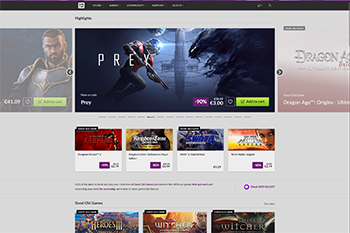
GOG vs. Steam: The Battle for Mod Support and DRM-Free Gaming
In the ever-evolving landscape of PC gaming, two digital storefront titans stand prominently: Steam, the undeniable market leader, and GOG (formerly Good Old Games), a platform championed for its unwavering commitment to player ownership. While Steam has long dominated with its vast library, community features, and integrated modding solutions, GOG has quietly but steadily carved out a significant niche, driven by a core philosophy that resonates deeply with a segment of the gaming community. This rivalry isn't merely about who sells more games; it's a fascinating battle for the hearts and minds of gamers, particularly concerning fundamental issues like mod support and the future of DRM-free gaming. Understanding the nuanced differences and GOG's strategic moves reveals much about the potential
future of GOG in a competitive market.
GOG's Evolution: From Niche Archivist to Modern Contender
Almost a decade ago, GOG began as a modest endeavor by CD Projekt. Its initial mission was noble yet niche: to lovingly restore and re-release classic PC games, ensuring they ran seamlessly on modern operating systems. This commitment, coupled with fair prices and exceptional customer service, laid a robust foundation. But what truly set GOG apart from day one was its radical, player-centric stance: every game sold would be entirely DRM-free. This philosophy meant that once you bought a game, it was truly yours, free from restrictive copy protection that often hinders legitimate players.
What started as "Good Old Games" quickly transcended its origins. Today, GOG is far from a small operation; it employs over 160 dedicated individuals and has expanded its catalog far beyond cherished classics. You'll now find the latest and greatest independent titles, like *Pathfinder: Kingmaker* and *A Bard's Tale 4*, sitting alongside timeless masterpieces. This growth has been facilitated by the development of GOG Galaxy, a sophisticated, Steam-like client that ensures games are kept up to date and provides a seamless user experience. This strategic pivot highlights GOG's ambition to be a full-fledged competitor in the modern gaming space, not just a digital museum. For a deeper dive into GOG's historical journey and its core principles, read about
From Old Games to New Era: GOG's Enduring DRM-Free Mission.
The DRM-Free Philosophy: A Foundational Pillar
The principle of DRM-free gaming is not just a marketing slogan for GOG; it's the very bedrock of its identity. In an industry where many publishers employ various forms of digital rights management that can lead to frustrating online authentications, limited installs, or even the loss of access to purchased content, GOG stands as a beacon for consumer rights. The ability to download a game and install it without an internet connection, or to back it up and play it years later without fear of server shutdowns, offers a powerful sense of ownership. This commitment resonates with gamers who value preservation, archival, and ultimate control over their digital purchases. It ensures that the games you buy from GOG remain playable for the long haul, free from the often-unforeseen consequences of DRM.
GOG Galaxy: A Seamless Gaming Experience
The introduction of GOG Galaxy was a critical step in GOG's evolution. Initially, GOG was purely a download service. Galaxy transformed it into a modern gaming platform, offering features comparable to Steam. This includes automatic game updates, cloud saves, achievements, multiplayer functionality, and a unified friends list. Critically, while Galaxy enhances the GOG experience, it remains entirely optional for most games, reinforcing the DRM-free ethos. Players can still download standalone installers and play without the client, a flexibility that Steam largely doesn't offer. This combination of modern convenience and absolute player freedom is a unique selling point for GOG.
The Modding Frontier: A Game-Changer for GOG?
One of Steam's most significant advantages, particularly for many PC gamers, has been its robust support for modding, primarily through the Steam Workshop. This integrated system makes discovering, installing, and managing mods incredibly straightforward, fostering vibrant communities around games like *Skyrim*, *Garry's Mod*, and *Factorio*. For years, GOG's modding scene has relied on external websites and manual installations, a process that can be daunting for less tech-savvy users.
However, the
future of GOG is set to include a game-changing addition: official mod support. Piotr Karwowski, GOG's managing director, confirmed that mod support is "in the pipeline," an announcement that has generated considerable excitement within the community. This move could be transformative, potentially leveling the playing field with Steam in a crucial area and attracting a new wave of gamers who prioritize modding for extended gameplay and creativity.
Why Mod Support Matters in the PC Gaming Ecosystem
Modifications (mods) dramatically extend the life and replayability of games. They allow players to:
* **Enhance Graphics:** Improve textures, lighting, and visual effects beyond the vanilla game.
* **Add New Content:** Introduce new quests, characters, items, and even entire storylines.
* **Fix Bugs & Improve QoL:** Address issues or implement quality-of-life improvements that developers might not have.
* **Create Unique Experiences:** Fundamentally alter gameplay mechanics, genres, or themes.
By embracing official mod support, GOG isn't just adding a feature; it's fostering a more dynamic and engaged community. This could lead to GOG versions of games becoming even more attractive, especially for titles with strong modding communities.
Navigating the GOG Modding Future
Implementing effective mod support presents challenges. GOG will need to consider:
* **Integration with GOG Galaxy:** A seamless interface for browsing, downloading, and installing mods would be key.
* **Modder Tools & APIs:** Providing developers and modders with tools to integrate their creations.
* **Curating & Moderating Content:** Ensuring quality and safety without stifling creativity.
* **DRM-Free Compatibility:** Maintaining the DRM-free promise while supporting potentially complex modding frameworks.
If GOG can deliver a user-friendly and robust modding platform, it will significantly boost its appeal, especially for games that thrive on community-generated content.
GOG vs. Steam: A Clash of Ideologies and Features
The rivalry between GOG and Steam is less about a direct feature-for-feature comparison and more about differing philosophies. Steam, backed by Valve, is the behemoth with an unparalleled market share, a vast social network, and features like the Steam Workshop, Big Picture Mode, and Proton for Linux gaming. Its strength lies in its ecosystem's sheer breadth and depth.
GOG, while smaller, offers a compelling alternative rooted in its core values. It's a platform for gamers who want to own their games outright, without the digital strings attached.
The DRM-Free Advantage vs. Steam's Dominance
*
GOG's DRM-Free Edge: As discussed, this is GOG's biggest differentiator. It appeals to a discerning consumer base that values long-term access, privacy, and freedom from potential server dependencies. It also makes games easier to back up and play offline indefinitely.
*
Steam's Dominance: Steam benefits from network effects. More players mean more friends, more community interactions, and often, better multiplayer experiences. Its extensive sales, early access programs, and feature-rich client make it the default for many.
Beyond the Libraries: Community and Features
While GOG Galaxy has closed much of the feature gap, Steam still holds an advantage in terms of community size and certain specialized features. However, GOG's focus on curating a quality catalog and fostering a more intimate, player-friendly environment remains a strong draw. The upcoming mod support could significantly enhance GOG's community engagement by empowering players to shape their gaming experiences. For more insights into GOG's strategic direction, check out
GOG's Future: Mod Support, Steam Rivalry, and DRM-Free Growth.
The Future of GOG: A DRM-Free Horizon
The
future of GOG appears bright, albeit challenging. It operates as a distinct entity but benefits from its close relationship with CD Projekt, one of the most respected game developers in the world. This synergy is particularly evident when major CD Projekt titles like *Cyberpunk 2077* or the *Witcher* series are released; GOG often becomes a preferred destination for discounts and a direct way to support the developer's ecosystem.
CD Projekt's Influence: A Synergistic Relationship
CD Projekt's development arm, CD Projekt Red, has undeniably propelled GOG to new heights. The success of *The Witcher* games made CD Projekt a household name, and GOG served as the natural, DRM-free home for these titles. This familial advantage means GOG often gets favorable treatment, exclusive bundles, and a direct line to some of the industry's most anticipated games. This internal synergy is a significant asset that few other digital storefronts possess.
Empowering Players: The Core of GOG's Strategy
GOG's long-term strategy seems firmly rooted in its original mission: empowering players. By maintaining its DRM-free stance, investing in features like GOG Galaxy, and now committing to official mod support, GOG is building a platform that puts control and choice squarely in the hands of the gamer. This strategy might not win GOG the largest market share, but it ensures a loyal and growing community that values these principles above all else. For gamers, this competition is ultimately beneficial, pushing both platforms to innovate and offer better services.
Conclusion
The battle between GOG and Steam is more than just a commercial rivalry; it’s a contest of ideologies, with the gamer as the ultimate beneficiary. While Steam remains the industry giant with its vast ecosystem and seamless modding via the Workshop, GOG continues to champion player ownership through its unwavering DRM-free policy and growing feature set. The confirmed addition of official mod support marks a pivotal moment for the
future of GOG, promising to bridge a significant gap and attract a broader audience. By sticking to its principles, leveraging its relationship with CD Projekt, and continually enhancing its platform, GOG is poised to remain a vital and compelling alternative for gamers who value freedom, control, and the enduring quality of their digital game libraries.